News
Beyond Talk Therapy: New Frontiers in Mental Health
By Teemu Arina ·
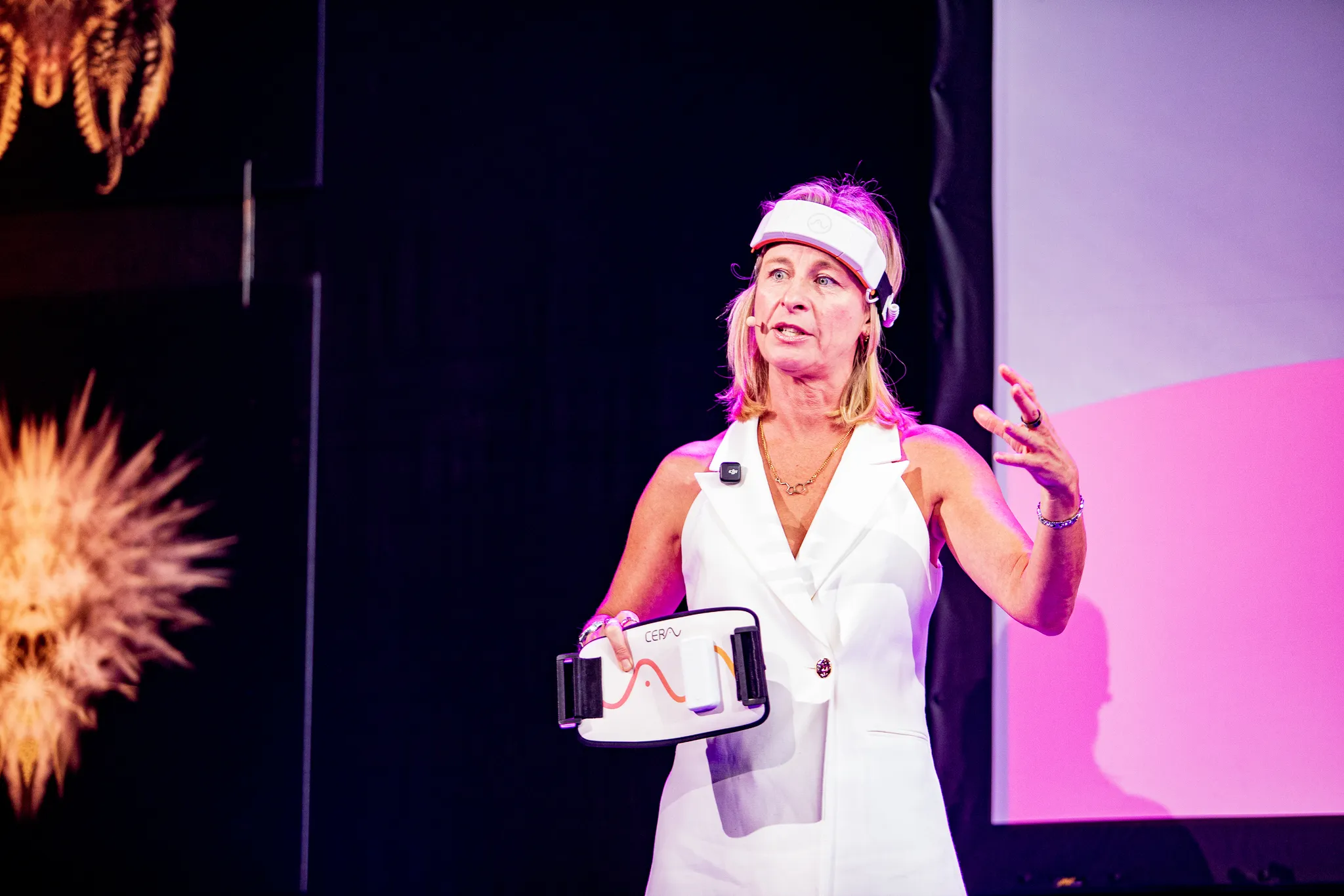
Mental health and mental illness involve more than talk therapy alone. Metabolic psychiatry, photobiomodulation and integration after altered-state experiences offer distinct ways to consider support, with different levels of evidence.
A broader view of mental health
Mental illness is not simply a matter of mindset. Mental health connects with physical health and daily life, and people’s needs differ. Psychological care remains part of that picture.
At Biohacker Summit 2023 Amsterdam, physician Simone Koch described mental illness as a widespread crisis, citing 960 million people affected globally, one in eight, and a lifetime prevalence that could reach one in two. Separately, a Global Burden of Disease analysis of mental disorders among people aged 5 to 24 estimated that 293 million people in this age group had at least one mental disorder in 2019. The figures use different populations and measures, but both signal substantial need.
An umbrella review of mental disorders and clinical outcomes in physical disease describes a significant bidirectional association between mental and physical health. Koch’s talk likewise argues for considering the brain’s physical and metabolic needs alongside psychological treatment.
“The brain is the canary in the coal mine, telling us that there is something on a very deep basis wrong with our energy supply. It is such a demanding organ that it requires twenty percent of the energy we produce.”
— Simone Koch, Biohacker Summit 2023 Amsterdam
This perspective puts sleep, energy and bodily stress alongside thoughts and emotions. Physical approaches do not replace therapy or established support. They can prompt consideration of the whole picture.
Metabolic psychiatry: ketosis as a calming state
Metabolic psychiatry examines how the brain’s energy use may relate to mental health. At Biohacker Summit 2023 Amsterdam, Koch proposed that trauma can affect the brain’s ability to use glucose, while ketone bodies may provide alternative fuel to support repair and neuroplasticity alongside psychological treatment.
“If the brain is damaged, it may not be able to process glucose for repair. Ketone bodies provide a different source of energy that helps the brain heal alongside other treatments like neuroplasticity and therapy.”
— Simone Koch, Biohacker Summit 2023 Amsterdam
Rather than assuming someone should adopt a ketogenic diet, the practical question is whether food and energy metabolism are worth discussing with a qualified clinician, particularly when exploring support for anxiety or PTSD. The papers available for this article do not establish ketosis as a treatment; Koch presented a proposed framework, not a universal prescription.
Koch also argued that poor sleep can feed a cycle in which the brain struggles to process trauma, making sleep part of recovery rather than a minor lifestyle detail.
“Sleep is not negotiable for health. The worse you sleep, the worse your health gets, and you enter a vicious cycle where your brain is unable to process trauma. REM sleep is essential for the brain to process and heal.”
— Simone Koch, Biohacker Summit 2023 Amsterdam
Before a major dietary change, people can consult a health professional familiar with their circumstances and care. The broader aim is to consider what may help the brain and body engage with therapy, rather than assume one way of eating will resolve trauma or mental illness.
Photobiomodulation: the gut-brain connection
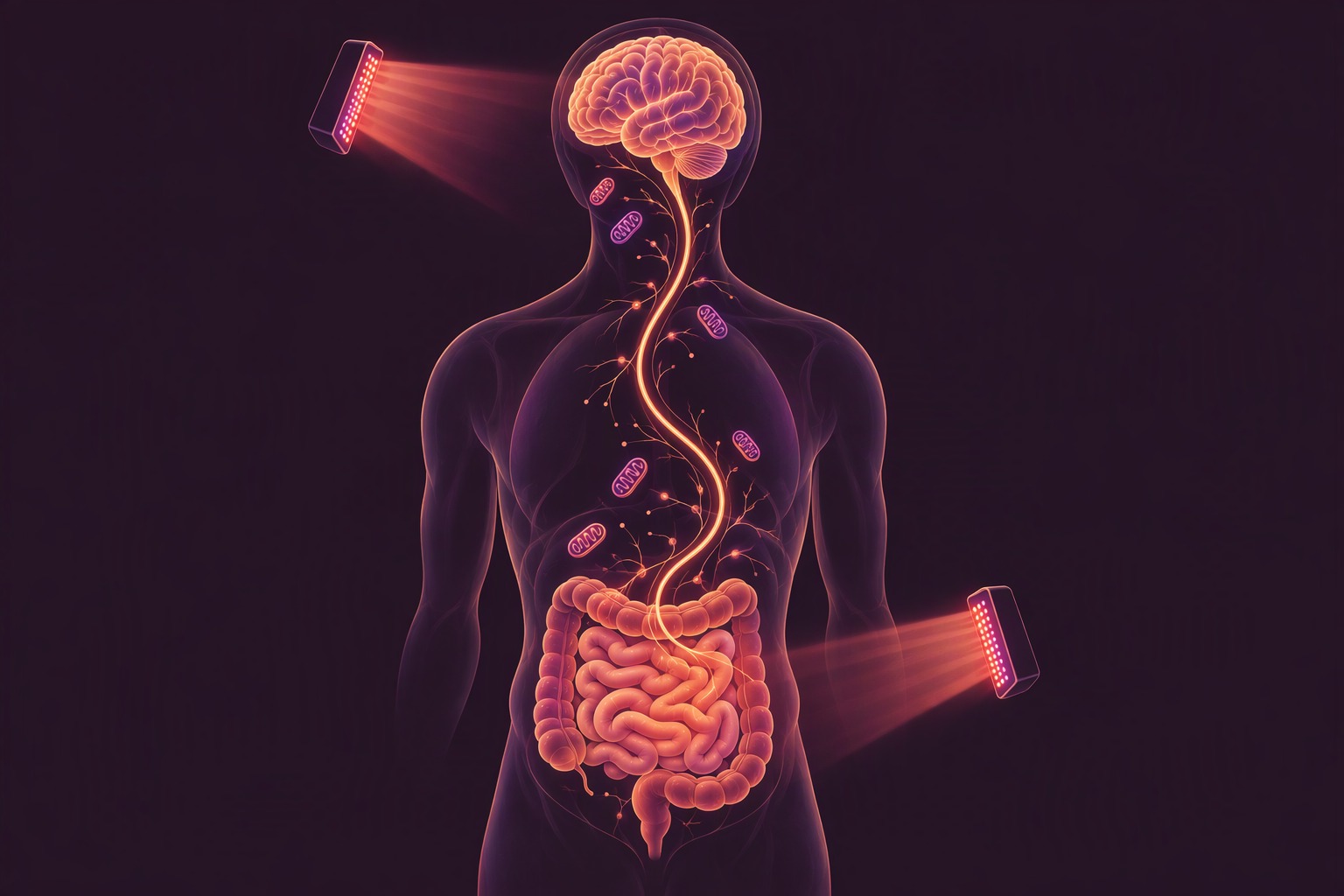
The illustration shows a proposed model linking light directed at the brain and gut with a connecting nerve pathway.
Photobiomodulation uses particular wavelengths of red or near-infrared light. At Biohacker Summit 2023 Amsterdam, Sarah Turner discussed possible links between light, the brain and the body, including effects on mitochondria and blood flow. She noted that hair and the skull limit how much light reaches the brain directly.
Turner’s central idea was that emotional experience is not confined to the head. The gut has neurons and neurotransmitters, she said, while the microbiome communicates with the brain, including through the vagus nerve.
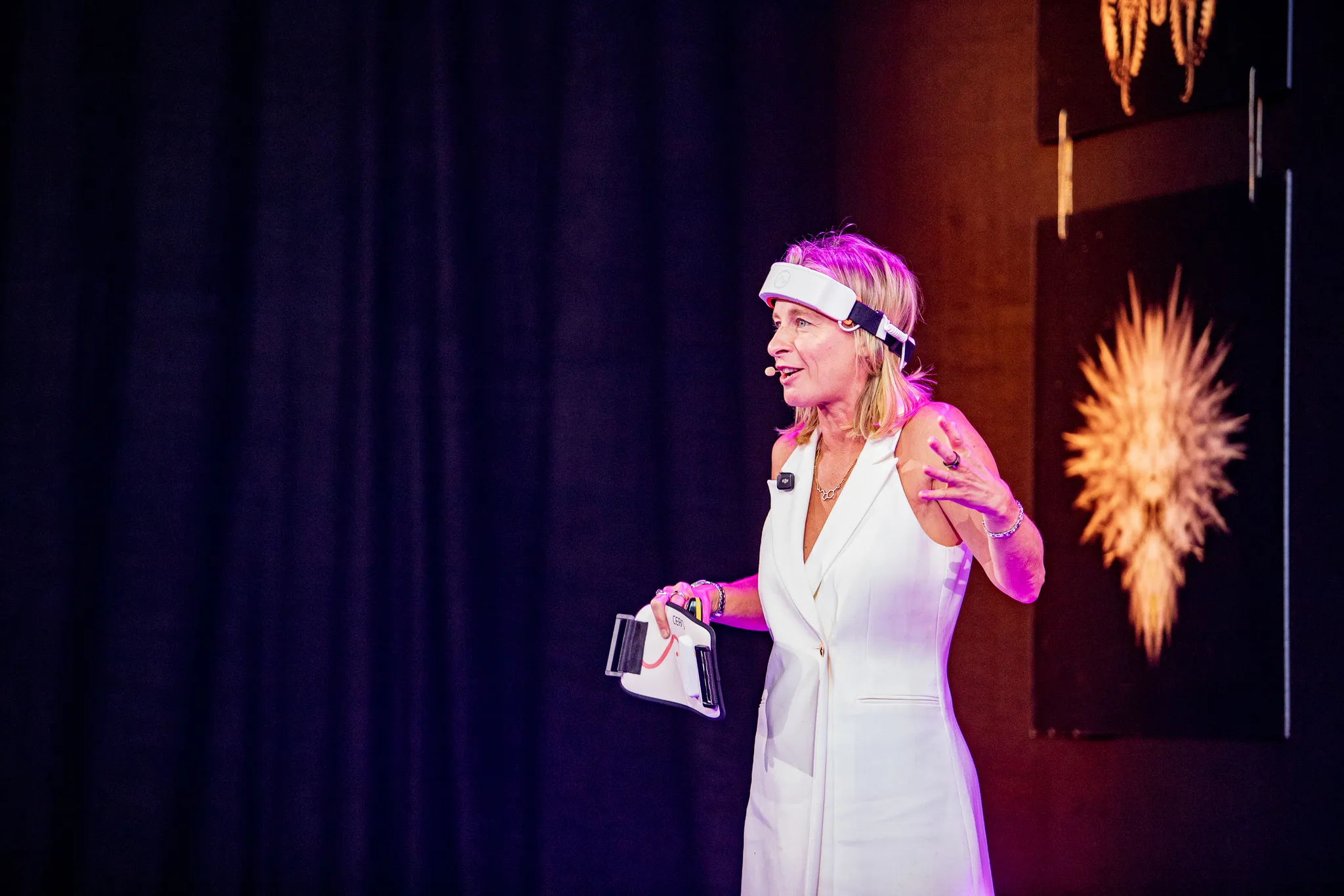
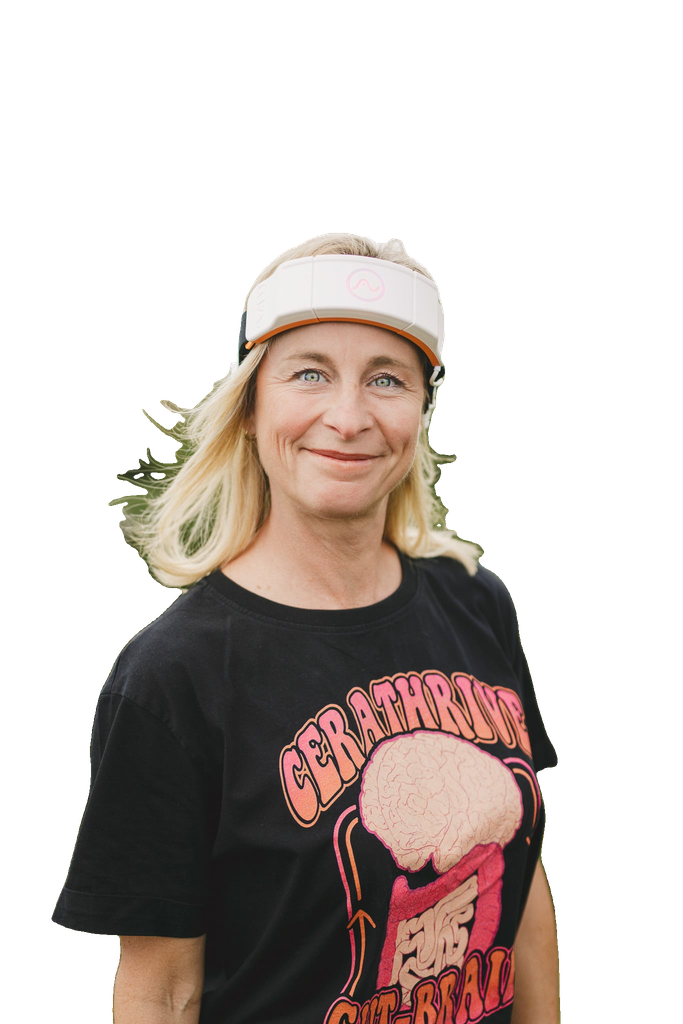
Sarah Turner at HOLOLIFE Summit 2025 Europe
“The gut is an organ that has neurons and neurotransmitters and processes information. We should think of the microbiome as an integral part of our immune system and a vital communicator with the brain.”
— Sarah Turner, Biohacker Summit 2023 Amsterdam
Turner proposed that directing light at both the gut and brain could have complementary effects across the body. Her talk raised possible mechanisms involving mitochondria, blood flow and water in the brain, but these remain proposed mechanisms. The papers available for this article do not establish photobiomodulation as standard mental-illness treatment.
For readers, a proposed mechanism is different from demonstrated clinical benefit. Anyone considering a device can ask what outcome it is meant to support, what evidence exists and how it fits with existing care. Turner’s model raises questions about the gut-brain relationship, while the evidence cited here does not show that light therapy will improve an individual’s mental health.
The role of integration in altered states
A powerful experience may feel significant, but how it carries into ordinary life matters too. At Biohacker Summit 2024 Helsinki, Amánda Argot Efthimiou described integration as reflecting on altered-state experiences and bringing useful insights into daily life.
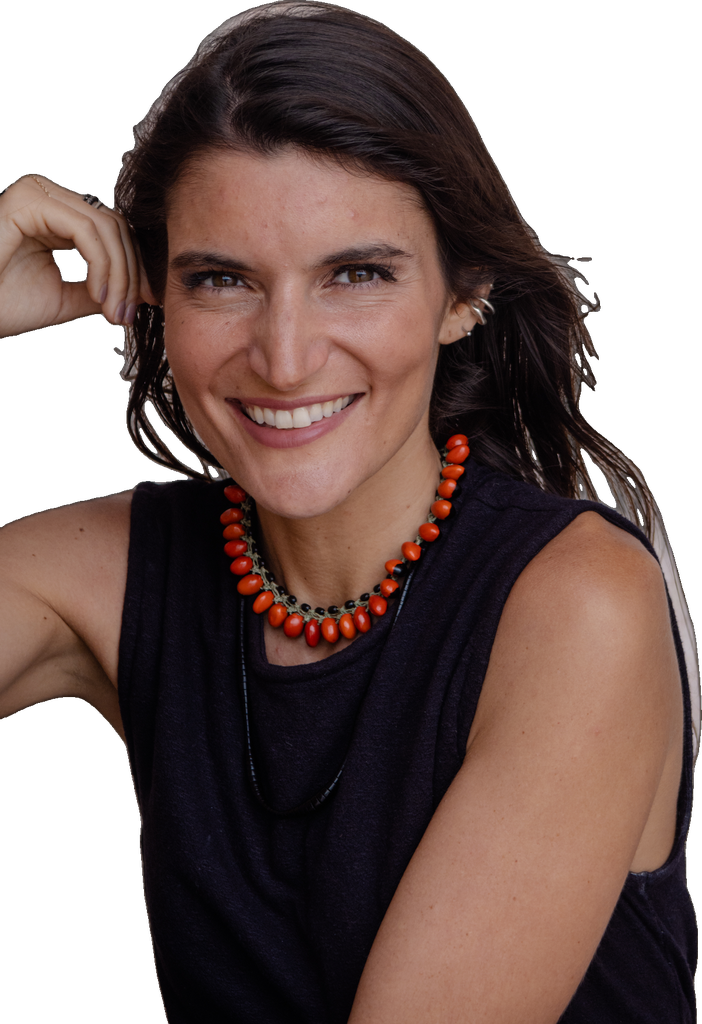
Amánda Argot Efthimiou
“Integration is how we translate transformational moments into meaningful reconnections with ourselves, with others, and with the world we live in.”
— Amánda Argot Efthimiou, Biohacker Summit 2024 Helsinki
Efthimiou described a client who moved quickly between retreats and altered-state experiences without processing them. She recommended allowing time for rest, returning to routines and noticing changes in thoughts, self-understanding and relationships. She also discussed body-focused practices and reconnecting with personal intentions.
The point of integration is to consider what, if anything, should change in everyday life, rather than seek another peak experience. Reflection on habits, relationships or purpose, alongside support from a trusted community, can be personal and ongoing rather than completed in one session.
The talk cautions that altered-state experiences will not necessarily resolve underlying difficulties. For people dealing with trauma or addiction, the emphasis is on time, routine and support between experiences, rather than chasing intensity.
Holistic approaches to long-term mental wellness
A whole-person approach means considering how psychological care, physical health and daily life connect, and what fits an individual. Koch emphasised the brain’s energy needs and sleep; Turner discussed the gut-brain connection; Efthimiou described reflection, rest and daily practice after altered states.
People can ask whether sleep affects daily functioning and raise food or physical-health concerns with a clinician. They can also define what change they hope to see from a new method and how to assess its effects in everyday life.
The talks address support alongside professional care and the conditions surrounding it. The HOLOLIFE Summit 2027 Amsterdam takes place on 13–14 November 2027 in Amsterdam.
FAQ
Can diet impact mental health?
Koch proposed that ketone bodies may provide alternative energy for the brain and support repair alongside other treatments. This framework does not prove ketosis treats mental illness; dietary changes are best discussed with a qualified health professional in light of individual care.
What is the gut-brain connection?
It is communication between the gut and brain within a wider body system. Turner discussed the gut’s neurons and neurotransmitters, the microbiome and pathways such as the vagus nerve as parts of that connection.
How does light therapy affect the brain?
Photobiomodulation uses red or near-infrared light, with possible effects involving mitochondria, blood flow and the gut-brain relationship. The material cited here does not establish it as a standard treatment for mental illness.
What is psychedelic integration?
Integration means reflecting on an altered-state experience and bringing useful insights into everyday life. Efthimiou described rest, routine and noticing changes in thoughts and relationships as part of the process.
Sources
Papers
- Worldwide Prevalence and Disability From Mental Disorders Across Childhood and Adolescence: Evidence From the Global Burden of Disease Study
- Impact of mental disorders on clinical outcomes of physical diseases: an umbrella review assessing population attributable fraction and generalized impact fraction
Talks
- Talk: “Ketosis as a Calming State for Anxiety & PTSD”, Simone Koch, Biohacker Summit 2023 Amsterdam
- Talk: “Lighting Up the Gut-Brain Connection”, Sarah Turner, Biohacker Summit 2023 Amsterdam
- Talk: “Altered States of Integration & the Psychedelic Myth”, Amánda Argot Efthimiou, Biohacker Summit 2024 Helsinki
This article is for general information and is not medical advice.
In this story
Comments
Loading comments…